Hair changes a lot after 50, yet the right cut makes thinning, gray, or white hair look deliberate and sharp. The best haircuts for older men work with the hair you have today, not the hair you had at thirty.
My grandfather cut his own hair with scissors and a razor, clearing every strand for a smooth, clean head.
My father kept a full head of hair into old age, used a hair cream, and his hair stayed charcoal black without one gray strand.
My silver-haired uncle kept his full white hair, had his beard trimmed, and trusted his barber to keep it neat.
Here are haircuts for older men that suit every situation, from a clean shave to a full head of silver.
Table of Contents
What makes a good haircut for an older man
A good haircut for an older man suits his current hair density, color, and face, and stays neat with little daily effort.
It should look intentional rather than leftover, which means clean edges, sensible length, and no attempt to hide what age has changed.
Three questions decide the right cut: how much hair you have, where you are losing it, and how much upkeep you will tolerate.
The answers point to one of three paths: going short, working with thinning, or keeping a full head looking polished.
How hair changes after 50
Most men notice thinning, a receding hairline, slower growth, and a change in color and texture as they age.
According to MedlinePlus Genetics from the National Library of Medicine, more than half of men over 50 have some degree of hair loss.
The same source estimates that male pattern hair loss affects about 50 million men in the United States.
It usually starts at the temples, forms an M-like hairline, and thins the crown across the years.
Gray and white hair also tends to feel coarser and drier, so it needs slightly different care from darker hair.
Choosing a cut by hair type
Your hair type matters more than any trend when choosing haircuts for older men, so start here before picking a style.
Balding at the crown or all over
When the crown thins heavily or hair loss is advanced, very short cuts look cleaner than any attempt at coverage.
Keeping the sides tight and the top close removes the contrast that draws attention to bare patches.
Thinning all over
Thinning hair looks fuller when it is cut short and given light texture, rather than grown long and left flat.
A good barber can add movement on top with scissors, which hides the scalp better than heavy layers.
A receding hairline
A hairline that retreats at the temples suits cuts brushed slightly forward, or styles kept very short all over.
Pulling hair straight back exposes the temples, so most barbers suggest a little fringe or textured top instead.
Gray or white hair
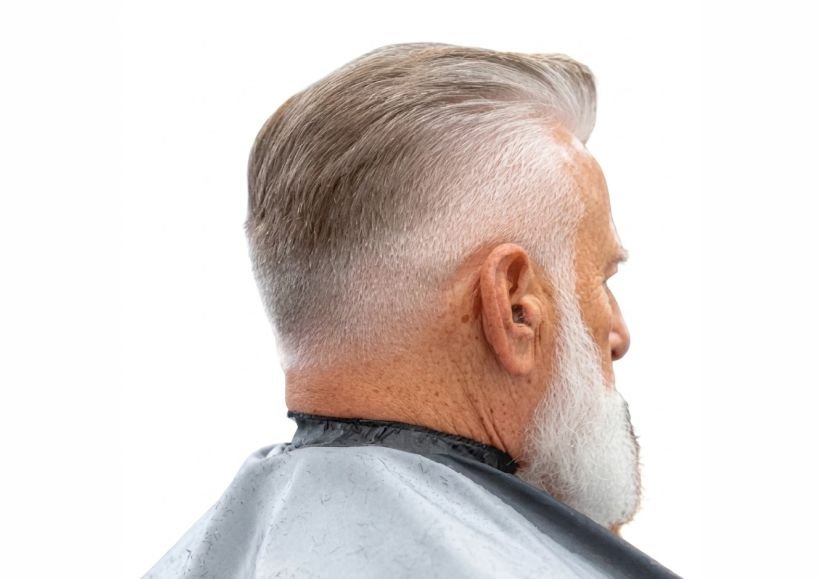
Silver and white hair stands out on its own, so the cut should be tidy, deliberate, and sensibly long.
Medium length swept back, or a classic short cut, lets the color do the talking without looking unkempt.
Thick, full hair
Men who keep thick hair, as my father did, have the widest choice, from side parts to longer textured styles.
Regular thinning at the sides and back stops bulk and keeps the head looking trim.
Classic short styles that suit older men
Short haircuts for older men dominate for good reason, since they are easy to maintain and flatter most faces.
The buzz cut
A buzz cut keeps an even layer of hair all over, suiting men who are thinning but not ready to shave.
A slightly longer guard gives a gentler look, while a very short one sharpens it.
The crew cut
A crew cut is short on the sides with a little more on top, tidy and practical with almost no styling.
It suits thinning and full hair alike, and grows out more gracefully than many short cuts.
The clean-shaven head
When hair loss is advanced, shaving everything off looks confident and removes any need to hide what is gone.
My grandfather kept his own head clean-shaven with a razor, and the look has suited older men for generations.
Three more styles worth knowing
The Ivy League is a slightly longer crew cut with a side part, suited to men with reasonable coverage on top.
The Caesar uses short bangs brushed forward to disguise a receding hairline without the awkwardness of a comb-over.
A classic side part with tapered back and sides suits full hair and looks polished at work, church, or weddings.
Matching the cut to your hair
This table pairs haircuts for older men with the hair type each one flatters most.
| Your hair | Best cuts | Avoid |
|---|---|---|
| Heavy hair loss | Clean-shaven head, very short buzz | Comb-overs |
| Thinning crown | Short textured crop, crew cut | Long, flat styles |
| Receding hairline | Caesar cut, buzz cut | Hair pulled straight back |
| Full gray or white hair | Swept-back style, Ivy League | Long, unkempt length |
| Full dark hair | Classic side part, Ivy League | Youthful trends |
Thinking about your face
The outline of your face plays a smaller role than hair density after 50, but it still helps you choose between two good options.
Round faces look slimmer with a little height on top and tight sides, while long faces suit fuller sides and less height.
Square faces carry almost any short cut well, and oval faces can wear nearly every style on this page.
If you are unsure, ask your barber to study your face from the front and the side before cutting.
How to work with your barber
A good barber can make average haircuts for older men look excellent, so explain clearly what you want.
- Bring a photo of the style you like, and ask if it suits your hair density.
- Ask for a tapered neckline, which grows out more neatly than a blunt line.
- Book a cut every few weeks, since short styles lose their neatness fast.
- Ask the barber to trim ear, nose, and eyebrow hair at the same visit.
- Keep your beard and hair lengths in balance, as my uncle’s barber did for him.
Styling and daily care
Most short cuts need little more than a towel dry, but a small amount of product keeps them looking finished.
A matte paste or light cream gives control without shine, which suits older hair better than heavy gel.
Apply product to dry hair with your fingertips, working from back to front for an even, natural finish.
Gray hair can turn yellow from sun, smoke, or hard water, so a purple shampoo once a week keeps it bright.
Use a gentle conditioner, since older hair loses natural oils and can feel dry or wiry.
If you color your hair, read the label carefully, because the FDA stopped allowing lead acetate in scalp hair dyes from January 2022.
Many men now choose to keep their natural gray, which usually looks more relaxed than very dark dye on an older face.
Haircut mistakes that age a man
A few common mistakes make an otherwise good haircut look tired, careless, or older than it should.
- Holding on to a comb-over long after it stops hiding anything at all.
- Growing gray hair long without regular trims, so it starts to look neglected.
- Asking for a youthful trend that clashes with your age and hair density.
- Letting the neckline and sideburns grow ragged between appointments for many weeks.
- Using heavy, shiny gel that clumps thin hair and shows more of the scalp.
Keeping your cut fresh between visits
A small trimmer lets you tidy the neckline and around the ears between appointments without changing the cut.
Wash and condition every few days rather than daily, since older hair and scalp dry out more easily.
Comb or brush gently while hair is damp, then let it air dry instead of using a hot blow dryer.
A soft brush also spreads natural oils along gray hair, which helps it look smoother and less wiry.
Protect your scalp
A shaved or thinning head is exposed to the sun, and that risk grows as men age.
The AAD notes that by age 50 men are more likely than women to develop melanoma, a serious skin cancer.
Wear a hat outdoors, and choose from these sun hats for bald heads for longer days outside.
Complete the look
A sharp haircut pairs well with well-fitted clothes from good brands for a complete, polished look.
On Sundays, a neat cut completes dressing well for Sunday service alongside a pressed shirt.
Updated frames make a big difference too, so look at glasses that suit your haircut and face.
Avoid other style choices that add years, including faded clothes and youthful trends.
A neat cut also helps when looking sharp at interviews for work after 60.
My author page says more about my grandfather the barber and the haircuts he gave us as children.
Conclusion
The best haircuts for older men follow hair type first: very short for balding, textured for thinning, and polished for full hair.
More than half of men over 50 have some hair loss, so choosing a cut that works with thinning is common sense.
Care for gray hair with purple shampoo and conditioner, check dye labels, and protect a bare scalp from the sun.
Book your next cut with these ideas in hand, and find more grooming help across Older Men’s Life.
Frequently asked questions
Which haircut suits a balding older man best?
A clean-shaven head or a very short buzz cut usually looks best, because it removes the contrast between bare and covered patches.
Should older men keep their hair short?
Shorter styles suit most older men, but a man with full white or gray hair can wear medium length if he keeps it neat.
How frequently should older men get a haircut?
Short styles stay tidy with a cut every few weeks, while longer silver styles can go a little longer with regular neck trims.
Is it better to dye gray hair or keep it natural?
Natural gray usually looks more distinguished, but if you dye it, choose a shade slightly lighter than your original color and check every ingredient.